Every September, we get a three-day weekend.
For many of us, Labor Day means a barbecue, a trip to the lake, the unofficial end of summer, or one last chance to sleep in before school and work are fully back in swing.
But Labor Day wasn't created for a three-day weekend.
More than 140 years ago, American workers were putting in extraordinarily long hours under difficult conditions. The idea that work should provide a person with dignity, a fair wage, reasonable hours, and the ability to support a family was far from guaranteed.
Then, in 1882, something unusual happened in New York City.
Thousands of workers gathered for a parade.
They weren't celebrating a holiday that already existed. They were creating one.
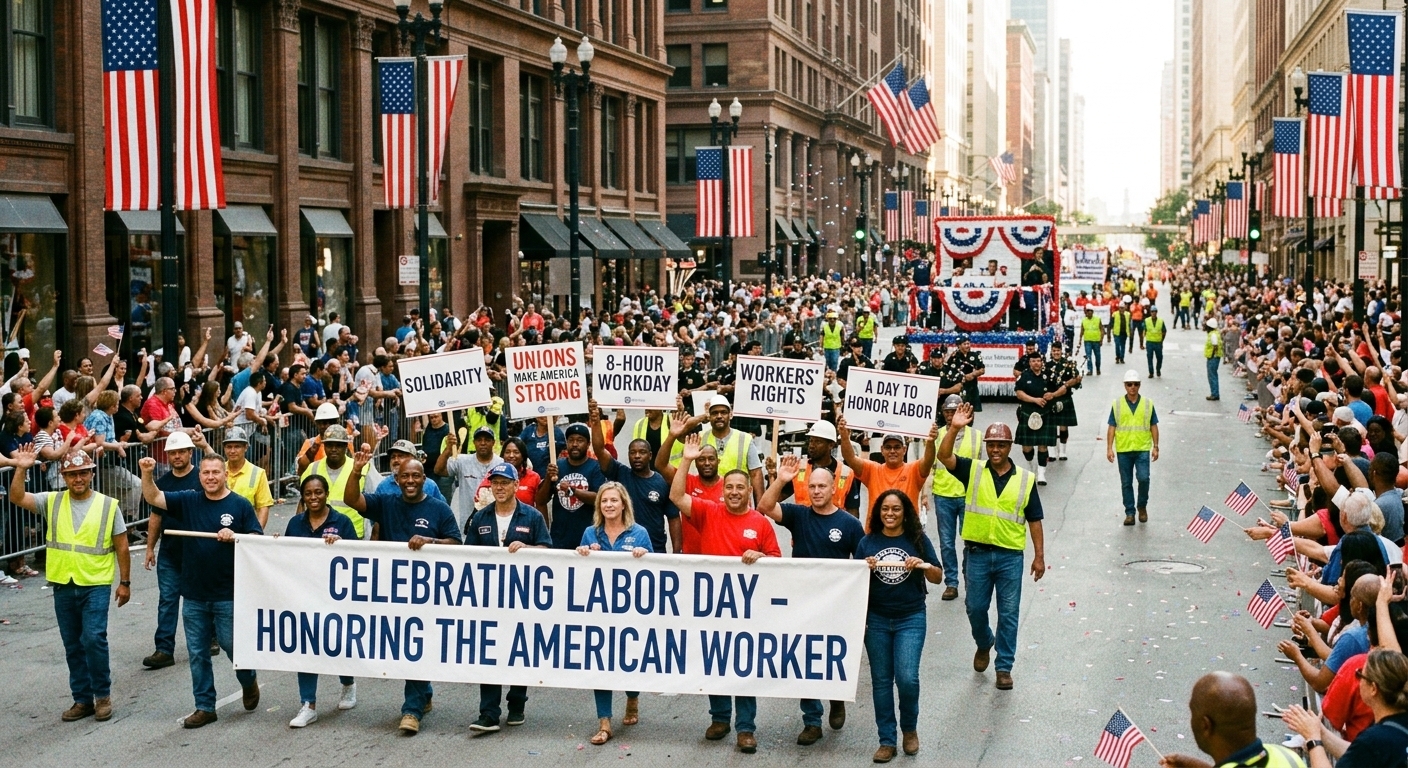
On September 5, workers marched through the streets to publicly recognize the contribution of working people. The idea spread. Other cities and states began recognizing Labor Day, and eventually the movement reached the federal government.
In 1894, Congress made Labor Day a national holiday, designating the first Monday in September as a day to honor American workers.
But there was something bigger happening beneath the parades.
Workers were beginning to understand that individually, they had limited power. Collectively, they could demand change.
They organized. They marched. They negotiated. And sometimes, they went on strike—often at enormous personal risk.
The eight-hour workday, for example, didn't simply appear because someone decided it was a good idea. Workers spent years organizing and striking for shorter hours. The campaign became one of the defining battles of the American labor movement.
And eventually, the things those workers fought for began to feel normal.
A reasonable workday.
Time with your family.
A safer workplace.
The ability to speak up when something isn't right.
The expectation that work should provide more than simply a paycheck.
That's the part of Labor Day we sometimes forget.
The things we consider normal today were not always normal.
Someone had to believe they could be better.
Someone had to speak up.
Someone had to take the risk of being the first person to say, "This isn't good enough."
And someone else had to stand beside them.
That's why Labor Day matters.
It's not really about taking a day off from work.
It's about recognizing the value of the people who make everything else possible.
The people who build our homes, teach our children, care for our families, manufacture the products we depend on, run our businesses, serve our communities, and keep the country moving forward.
So this Labor Day, enjoy the barbecue. Take the trip. Sleep in.
But for just a moment, remember what the holiday represents.
Work has value.
Workers have value.
And progress happens when we recognize both.
That's the story behind Labor Day.